攀桂堂 雲平筆
Hankeido · Umpei Fude · since 1615
Most calligraphy brushes are made by gluing a tuft of hair into a bamboo tube. Hankeido's are built differently: layer by layer, each wrapped in handmade paper, by a family that has made brushes for around four hundred years. This is the story of the Umpei brush, and how it is made by hand.
At a glance
- Workshop: Hankeido, 攀桂堂, founded in Kyoto in 1615 by the Fujino family
- Brush: Umpei fude, 雲平筆, named for the title passed down to each head of the family
- Technique: maki fude, the paper-wrapped brush, a construction now made in the traditional way only here
- Brushes have long been supplied to Japan's Imperial Household
- Shop the collection: Umpei Fude at LoftModern
Four hundred years of Umpei
The Fujino family opened its brush workshop in Kyoto in 1615. Each master takes the name Umpei, and the current head is the fifteenth to carry it. The workshop, now based in Takashima in Shiga Prefecture, has supplied brushes to the Imperial Household and to calligraphers lucky enough to find them. In 2015 it marked four centuries of Umpei brushes with a book on the history of the paper-wrapped brush.
The next generation is already at the bench. Junichi Fujino, born in 1983, began calligraphy at five, studied it at university in Kyoto, then spent three years training as a brush maker in Kumano, Hiroshima, Japan's largest brush town, before returning to work beside his father.
What makes a paper-wrapped brush
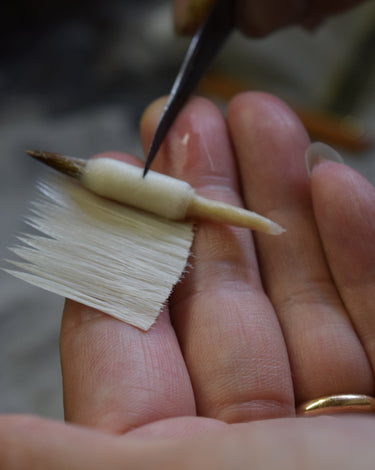
A maki fude is built in layers. A core of hair is shaped, then wrapped around its base with thin handmade washi paper. More hair is added around it and wrapped again, and the process repeats until the tuft has the right size and shape. About the first third of the root ends up bound in paper.

That paper gives the brush its character. The base becomes very firm, while the shorter hairs at the tip stay flexible and spring back the instant they lift from the paper. The result is a brush that is extremely responsive, ideal for the fine, precise lines of sutra copying and for studying the calligraphy classics.

By hand, from start to finish
Every step is done by hand: sorting and combing the hair, removing any that are bent or broken, shaping the core, wrapping it in paper, binding it with thread and setting it into the shaft. Different hairs give different brushes. Horse and deer hair make a firm, bold brush; wool, horse and raccoon dog hair together make a softer, more forgiving one that holds plenty of ink.

Three brushes
- Paper-Wrapped Calligraphy Brush D: black horse and deer hair, bold and crisp
- Paper-Wrapped Calligraphy Brush E: the all-rounder
- Paper-Wrapped Calligraphy Brush F: the gentle first brush
See them all in our Umpei Fude collection, or explore more Japanese handmade craft.
Keep reading
- Another Japanese family craft: KUON brass bells from Takaoka
- More from Japan: Makoto Komatsu and the potters of Seto
Frequently asked questions
What is a maki fude?
A paper-wrapped brush. Its tuft is built in layers of hair, each wrapped at the base in washi paper, which makes the base firm and the tip very responsive.
Who makes Umpei brushes?
Hankeido, the Fujino family workshop founded in Kyoto in 1615. Each head of the family takes the name Umpei.
What are Umpei brushes best for?
Precise work such as sutra copying and studying classic calligraphy, as well as regular and semi-cursive scripts.
What hair are the brushes made from?
Brush D uses black horse and deer hair. Brushes E and F use a mix of wool, horse and raccoon dog hair.
How should I care for the brush?
Rinse it under running water after each session, press out the water, shape the point and let it dry.
Sources: Beyond Calligraphy, Hankeido workshop; Beyond Calligraphy, Junichi Fujino; National Diet Library, 攀桂堂雲平筆四百年. Workshop photos courtesy of Hankeido / Umpei Fude.